NetMirror APK for Beginners: A Guide to Its Main Features
Using a new Android application for the first time can take a little practice. You may see different menus, buttons, and playback options without knowing exactly what they do. NetMirror APK can also take some time to understand if you have never used it before. The easiest way to get familiar with the app is to start with the basic functions and then explore the additional options. You do not need to change every setting or learn every menu on your first visit. This beginner-friendly guide explains the main areas of NetMirror APK and how new users can understand them.
Getting Familiar With the Main Screen
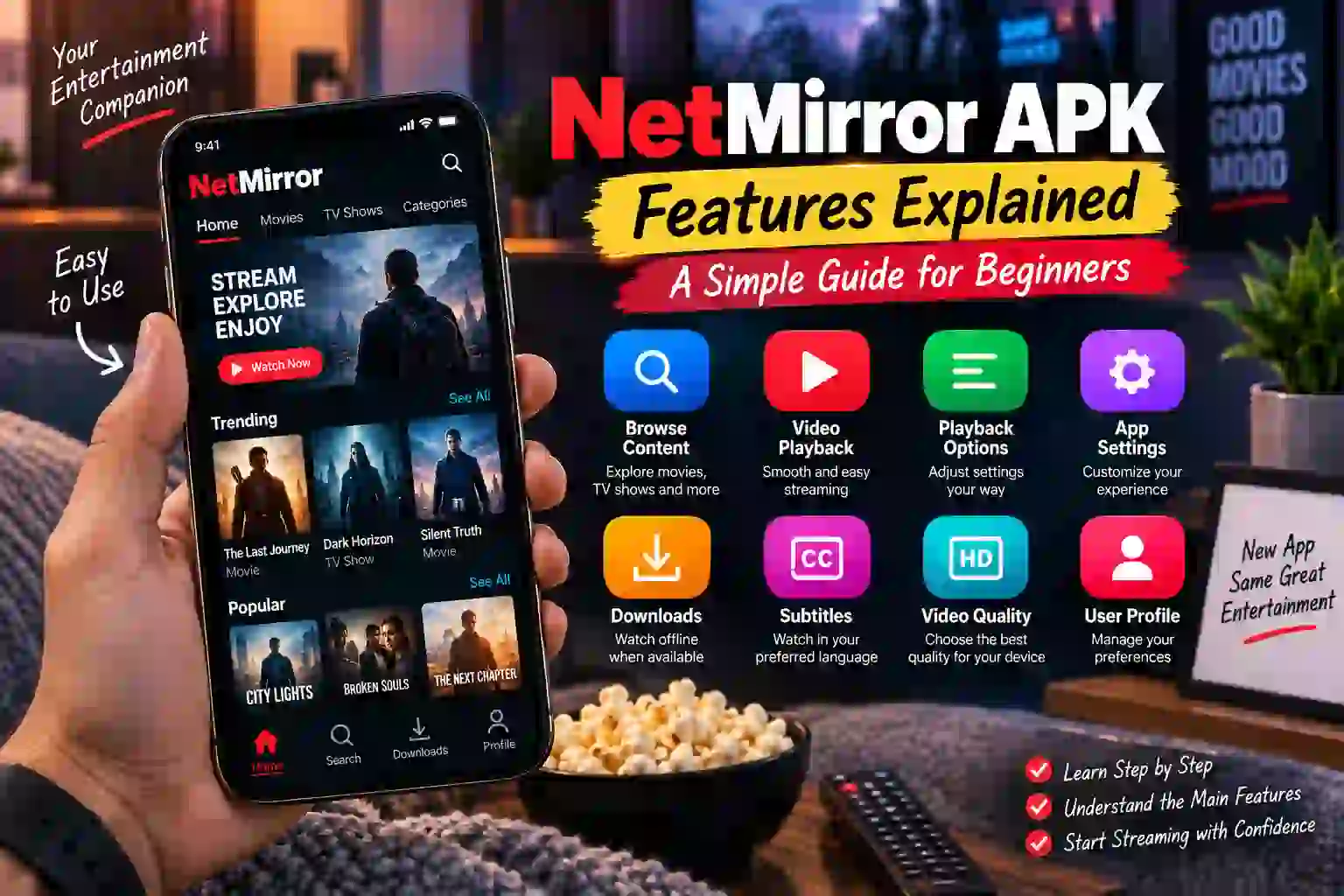
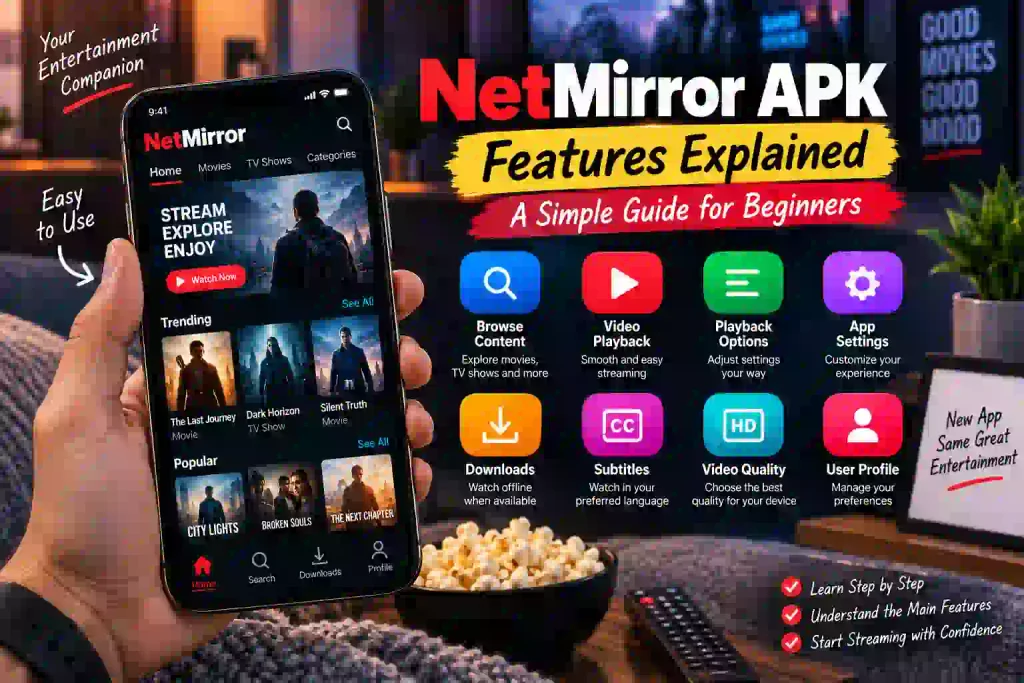
After opening NetMirror APK, start by looking at the main screen. The home area may contain different sections for browsing content and accessing other parts of the app. The exact layout can depend on the version installed on your Android device. Take a moment to identify the main navigation buttons. Knowing where these options are located will make it easier to move around the app later. There is no need to change settings at this stage. Simply explore the interface and become familiar with its layout.
Finding Content
If you already have a particular title in mind, the search function can be the quickest way to find it. Enter the name in the search field and check the results. Using the correct spelling can make the search process easier. If the complete title does not produce a result, try a shorter part of the name. You can also browse through the available sections when you are not searching for anything specific.
Opening a Title
After finding something you want to view, open its details page if one is available. The details section may provide information about the selected item before playback begins. Check the title and other available information to make sure you have selected the content you intended to open. From there, use the available playback option to start the video.
Understanding the Video Screen
Once playback begins, the video player becomes the main part of the interface. Some controls may be hidden while the video is playing. Tap the screen to display them. Depending on the version, you may see controls for pausing, seeking, volume, subtitles, video quality, and full-screen viewing. The controls usually disappear again after a short period so that they do not block the video.
Moving Through a Video
The progress bar lets you see your current position. If you want to skip an introduction or move to a different section, drag the progress indicator to the desired point. You can also use it to return to an earlier scene. On a slower connection, jumping far ahead may require some loading time. This is normal when the selected part has not already been loaded.
Choosing a Suitable Video Quality
Video quality is one of the settings that can affect your viewing experience. A higher quality setting can provide more detail, but it can also require more data and a stronger connection. If your video plays without interruptions, you can continue using the current setting. If you experience frequent buffering, check whether a lower quality option is available. There is no single quality setting that works for every user. Your connection, device, and viewing conditions all matter.
Using Subtitles
Subtitles are useful when you need text support while watching a video. If the selected content includes subtitles, look for the subtitle or CC option in the video controls. Some videos may offer more than one language. Select the option that is easiest for you to read. If no subtitle option appears, the content may not provide subtitles. This can vary between different videos.
Watching in Full Screen
Full-screen mode gives the video more space on the display. This can be useful when watching on a phone or tablet, especially when you want to focus only on the video. Look for the full-screen icon in the player and tap it when you want to expand the video. If the screen does not rotate automatically, check the auto-rotate setting on your Android device.
Managing Sound
Sound can normally be controlled using the physical volume buttons on your Android phone. Some versions of the video player may also provide a mute or volume-related control. If you can see the video but cannot hear anything, first check whether the device is muted. Also check the player itself and make sure the sound has not been turned off.
Exploring the Settings Area
Once you understand the basic playback controls, you can explore the settings menu. Settings can vary depending on the version of NetMirror APK. You may find options related to playback, language, subtitles, notifications, or other preferences. Do not change several settings together while learning the app. A better approach is to change one setting, use the app for a while, and then decide whether you want to keep the change.
Language and Subtitle Preferences
Language options can make an app easier to use. If your version provides language preferences, check the available choices inside the relevant settings menu. Subtitle preferences may also be available depending on the version. Remember that changing the interface language and changing the language of video subtitles are not necessarily the same thing. The available options depend on the app and content.
Understanding Buffering
Buffering happens when the video needs more data before playback can continue. It can be caused by an unstable internet connection, limited bandwidth, network congestion, or other factors. If buffering happens often, first check your internet connection. You can also try a lower available video quality. Closing unnecessary background applications may help if your device is under heavy load. If other online services are also slow, the issue may be related to your connection rather than the app.
Checking Your Device
Your Android device also plays a role in app performance. Older devices may have less available memory or storage compared with newer models. Before troubleshooting the app, check whether your device has enough free storage and whether other applications are using significant resources in the background. Restarting the device can also be a useful basic troubleshooting step when several applications are behaving unusually.
Managing Temporary Data
Android applications can create temporary cache files during normal use. If NetMirror APK becomes slower or behaves unexpectedly, you can check its cache through Android’s application settings. Clearing cache removes temporary files. It is different from clearing app data, which can reset additional information. For this reason, read the Android confirmation carefully before choosing an option.
Keeping Track of the App Version
The installed version can be important when following troubleshooting instructions. Different versions can have different menus, layouts, and available options. If you install an update, take note of the new version number. If a problem appears after an update, this information can be useful when identifying what changed. Always verify an APK file and its source before installing it on your device.
What to Do When the App Does Not Work
Not every problem requires a complicated solution. If the app does not respond, close it and open it again. If videos do not load, check your internet connection. If the application keeps crashing, check your Android version, device storage, and the compatibility of the installed release. If a particular option is missing, check whether the version you are using actually provides that feature. Simple checks can often help identify the source of a problem.
Safe APK Installation Practices
APK files should be treated carefully because Android allows applications to be installed outside the Play Store. Before installing an APK, check where the file came from and confirm that the version information matches what you expect. Do not install an unfamiliar file simply because it claims to be a newer release. It is also useful to review the permissions requested by an application and avoid granting permissions that do not make sense for its purpose.
A Simple Setup for New Users
If you are opening NetMirror APK for the first time, keep your initial setup simple. First, explore the main screen and search function. Then open available content and learn the basic player controls. After that, check video quality, subtitles, full-screen viewing, and the settings menu. Only change options that you actually need. This approach helps you learn the application without making unnecessary changes.
Final Thoughts
NetMirror APK can take a little time to understand when you are using it for the first time. The main screen, search tool, video player, quality controls, subtitles, full-screen option, audio controls, and settings are the areas most new users should become familiar with. The exact features and layout may vary between versions, so your interface may not look identical to screenshots or guides made for another release. Start with the basic functions and gradually explore additional options. Keep your Android device in good condition, maintain enough free storage, use a stable internet connection, and verify APK files before installing them. Once you understand the basic controls, everyday navigation becomes much simpler.